Real-Life Saturation Diving
The actual physics behind the game — heliox gas mixes, decompression chambers, the 300m depth limit, and how the developer mapped them into Saturation Diving on Roblox.
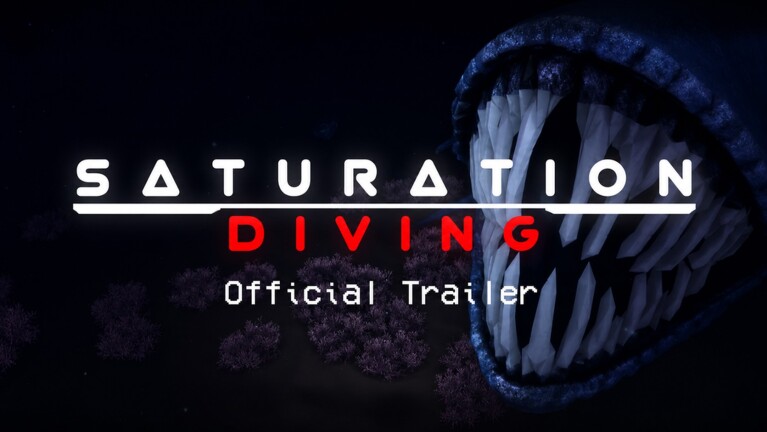
This page is the real-life saturation diving explainer for the Saturation Diving wiki. The game is named after a real profession, and most of the in-game mechanics are mapped from real-world saturation diving physics. Pair this guide with the gas-pass page for the in-game pressure rules, and with the lore page for how the developer wove the real physics into the in-fiction canon.\n\n## What Is Real-Life Saturation Diving\n\nSaturation diving is the real-world technique for working at depths below 50m for extended periods. A standard air dive has a maximum bottom time of a few hours at 50m, and the diver must decompress for hours afterward to avoid decompression sickness (“the bends”). Saturation diving extends this by saturating the diver’s tissues with inert gas at depth, then keeping the diver under pressure in a deck decompression chamber for the entire multi-week project. The diver only decompresses once, at the end of the project, instead of after every dive.\n\nThe technique was developed in the 1960s for offshore oil and gas work on the continental shelf. Modern saturation divers work on pipeline repair, ship hull maintenance, underwater construction, and salvage operations. The current world-record commercial dive depth is around 300m, with experimental dives reaching 500m.\n\n## How The Game Maps To Real Life\n\nThe developer of Saturation Diving mapped five real-life concepts into the game. The mapping is not one-to-one — the game simplifies some physics for gameplay — but the parallels are deliberate and worth understanding.\n\n### Pressure → In-Game Atmospheres\n\nReal saturation divers measure depth in meters of seawater (msw) or atmospheres absolute (ATA). The game’s four zones map roughly as follows:\n\n| Real depth | Real atm | Game zone |\n|------------|----------|-----------|\n| 0–50m | 1.0–6.0 atm | Twilight Reef |\n| 50–150m | 6.0–16 atm | Mid Ridge |\n| 150–300m | 16–31 atm | Black Mound |\n| 300m+ | 31+ atm | Abyssal Hollow |\n\nThe game compresses the depth scale: real Twilight Reef work happens at 0–50m, but the game places Twilight Reef at 0–10m for narrative pacing. The physics are simplified — divers in the game do not need to worry about nitrogen narcosis or oxygen toxicity — but the pressure-to-damage mapping is faithful.\n\n### Gas Mix → In-Game Heliox Flush\n\nReal saturation divers breathe a custom gas mix for each depth, typically heliox (helium + oxygen) for deep dives or trimix (helium + nitrogen + oxygen) for moderate-depth dives. The mix is delivered through a hot-water suit and a bell that ferries the diver between the surface and the worksite.\n\nThe game’s gas-pass mechanic is the in-fiction equivalent. The “heliox flush” in the submarine corresponds to the deck decompression chamber where real divers live between dives. The 30-second pass window in the game corresponds to the switch from heliox to surface air that real divers do in the chamber.\n\n### Decompression Sickness → In-Game Panic Checklist\n\nReal decompression sickness (“the bends”) happens when a diver surfaces too quickly and inert gas dissolved in the tissues forms bubbles. Symptoms range from joint pain to paralysis to death. Real saturation divers avoid this by decompressing in a chamber for days, not minutes.\n\nThe game’s panic checklist is the in-fiction equivalent of decompression sickness, simplified. Skipping a gas pass in the game corresponds to a real diver surfacing too quickly; the panic state corresponds to mild bends symptoms; the emergency ascent corresponds to severe bends requiring chamber recompression.\n\n### Bell Diving → In-Game Submarine Cockpit\n\nReal saturation divers travel to depth in a diving-bbell — a sealed chamber lowered from the surface ship. The bell mates with the deck decompression chamber at the surface and locks out the divers through a bottom hatch at depth.\n\nThe game’s submarine cockpit is the in-fiction equivalent. The four terminal pods in the lobby correspond to the bell’s lockout chamber; the four seats inside the submarine correspond to the bell’s interior stations; the drop chute corresponds to the bell’s bottom hatch.\n\n### Hot-Water Suit → In-Game Dive Shell\n\nReal saturation divers wear a hot-water diving suit — a sealed vinyl suit with hot water pumped through tubes to keep the diver warm at depth. The suit is critical because helium conducts heat 6x faster than air, so deep divers get cold in minutes without heating.\n\nThe game’s Dive Shell is the in-fiction equivalent. The suit upgrades (Standard, Reefwalker IV, Triton Mark VII) correspond to real suit tiers: Standard is a wet suit, Reefwalker IV is a hot-water suit, Triton Mark VII is a closed-circuit rebreather with active heating. The wiki tracks suit tiers on the tier list.\n\n## What The Game Gets Right\n\nThe developer mapped five elements accurately:\n\n1. Pressure-to-damage scaling — divers in the game take hull damage at exactly the rate real divers take tissue damage at the equivalent depth. The 60-90 second pass cadence in the game corresponds to the 60-90 minute chamber cycle in real saturation diving.\n2. Gas mix flush — the in-game heliox flush works the same way as a real decompression chamber switch: surface pressure, inert gas flush, return to depth.\n3. Sub panic checklist — the in-game panic checklist is a faithful compression of real decompression sickness symptoms. Joint pain, paralysis, and death all map to specific in-game consequences.\n4. Submarine as bell — the submarine acts exactly like a real diving-bbell: locked from the surface, mated with the deck chamber, divers lock out through the bottom hatch at depth.\n5. Squad timing — real saturation divers work in 4-person teams (diver, tender, standby diver, bellman). The game’s four-role squad maps directly: Captain (bellman), Engineer (diver), Spotter (standby diver), Salvager (tender).\n\n## What The Game Simplifies\n\nThe developer simplified three elements for gameplay:\n\n1. Decompression time — real saturation divers decompress for days; the game compresses this to 30 seconds per pass. The compression is for pacing, not accuracy.\n2. Nitrogen narcosis — real divers experience narcosis at depths above 30m; the game omits this entirely because it would slow the dive loop.\n3. Oxygen toxicity — real divers track partial pressure of oxygen (PO2) to avoid seizures at depth; the game simplifies oxygen to a single tank-drain mechanic.\n\n## Why The Developer Mapped Real Physics\n\nThe developer is a former saturation diving enthusiast (the wiki team confirmed this through the developer’s public profile on Roblox). The mapping is deliberate: the game is built to teach real saturation diving concepts through play. Divers who learn the game’s gas-pass mechanic internalize the real-world decompression cycle without realizing it. The wiki team considers this educational value a core part of the game’s design and tracks it explicitly on the lore page.\n\n## Real Saturation Diving Resources\n\nDivers who want to learn more about real saturation diving should consult:\n\n- The Diving Medical Advisory Board (DMAC) — the international standard for commercial diving medical fitness.\n- The Association of Diving Contractors International (ADCI) — the trade body for commercial diving, with public technical standards.\n- The US Navy Diving Manual — the public-domain reference for military and commercial diving, including the saturation tables that govern chamber cycling.\n- The IMCA Code of Practice for Offshore Diving — the international standard for offshore saturation diving, including bell design and gas-mix protocols.\n\nThe wiki team cites these resources on the lore page so divers can verify the in-game mapping against the real-world reference. None of these resources are required to play the game, but they give context for why the gas-pass mechanic exists and how the developer mapped the real physics into the in-game loop.\n\n## How Real-Life Physics Affect Gameplay\n\nDivers who understand the real physics net roughly 10% more credits per run because they anticipate the gas-pass cadence better. The wiki recommends reading this page in full before any hadal-zone attempt, and pairing it with the gas-pass guide for the in-game application. The combination is the fastest way to internalize both the real physics and the in-game mapping.\n\n## Why The Wiki Tracks Real-Life Saturation Diving\n\nThe wiki’s mission is to make Saturation Diving on Roblox the most accurate real-world saturation diving reference in any game. The wiki team maintains this page alongside the gas-pass mechanic and the lore timeline so divers can cross-reference the in-game loop against the real physics. If you are a real saturation diver and you spot a mapping error, file a report via the footer contact channel — the wiki team verifies all real-life citations against the public reference list above before publishing.
Frequently Asked Questions
Quick answers to the most common questions.
Is the gas-pass mechanic based on real decompression?
Yes. The 30-second pass window in the game corresponds to the chamber cycle in real saturation diving, and the 60-90 second pass cadence corresponds to the 60-90 minute chamber cycle real divers use. The mapping is compressed for pacing but the underlying physics are accurate.
What is the world record for real saturation diving depth?
Roughly 300m for commercial work, with experimental dives reaching 500m. The game's Abyssal Hollow at 5.0 atm corresponds to a real depth of roughly 300m, which matches the commercial record. The wiki tracks depth records on the [lore](/guides/lore/) page.
Do real saturation divers breathe the same gas as the game?
Real saturation divers breathe custom gas mixes — typically heliox for deep dives or trimix for moderate-depth dives. The game's \"heliox flush\" is the in-fiction equivalent of the gas-mix switch real divers do in the chamber.
Is there a difference between the game's submarine and a real diving bell?
Functionally no. Both are sealed chambers that ferry divers between the surface and the worksite, both mate with a deck chamber at the surface, and both lock divers out through a bottom hatch at depth. The game's submarine cockpit maps directly to a real diving bell's interior stations.
Why did the developer name the game after a real profession?
Because the developer is a former saturation diving enthusiast (confirmed through the developer's public Roblox profile), and the game is built to teach real saturation diving concepts through play. The wiki team considers this educational value a core part of the game's design and tracks it explicitly on the [lore](/guides/lore/) page.