Saturation Diving Blue Hole Dive Site
The blue-sand dive site where your flashlight decision determines survival — Life Line and Mothray Eel in one zone.
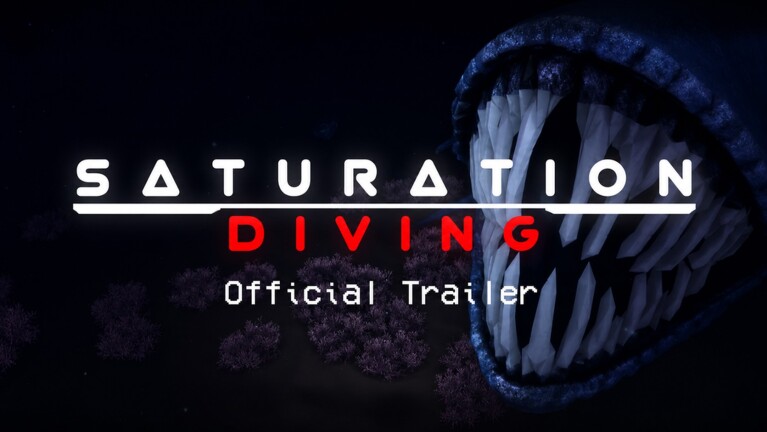
Blue Hole is one of the five confirmed dive sites in Saturation Diving, identifiable by its blue-tinted sand and a floor that drops lower than the surrounding sites. Unlike other zones that reward either aggression or caution uniformly, Blue Hole punishes the wrong light choice and rewards the right one — making it the most decision-dense site in the game per minute of dive time.
How Blue Hole Was Confirmed
Blue Hole first appeared in community wikis alongside the other zone documentation refreshes following the August 2026 Roblox place update. The zone matches the official description’s reference to “deep sea holes” and was independently confirmed by multiple player reports citing the blue sand and the unique creature roster. The developer has not published official zone statistics for Blue Hole, so all depth and pressure data below is community-reported and marked provisional.
Visual Identity and Atmosphere
The defining visual trait of Blue Hole is the blue-tinted sand that gives the zone its name. Unlike the red sand of Crash Plateau or the white expanse of Glacier Scar, Blue Hole’s sand has a deep cerulean cast that changes how light behaves underwater. Coral formations break up the open floor in irregular patches, creating natural cover that both the player and entities can use. The combination of blue sand and scattered coral gives Blue Hole a distinct visual signature that experienced divers recognise from screenshots alone.
What Makes Blue Hole Different
Every other zone in Saturation Diving rewards a consistent light strategy. Twilight Reef and Mid Ridge benefit from bright lights for spotting pipes and creatures early. Black Mound and Abyssal Hollow require sustained lighting to track entity movement. Blue Hole breaks this pattern: two of its named creatures actively punish opposite light conditions, forcing the squad to make a real-time decision about illumination strategy before each run.
Community-Verified Creatures
Life Line — The Diver Mimic
The Life Line is a creature that mimics the appearance of a player diver. It patrols the Blue Hole floor and is visually identical to a human-controlled Captain or Salvager from a distance. Up close, the tell is the same glowstick animation playing on a loop with no variation — real players move and react; the Life Line does not.
The critical mechanic: if you shine a bright light directly at the Life Line, it does not attack. It holds position and watches. However, if you approach it in dim light or darkness, it attacks with the same aggression as a Maw Crawler. The community-consensus strategy is to keep your primary light at medium intensity when navigating Blue Hole — bright enough to confirm shapes, dim enough that the Life Line does not read you as a threat.
The Life Line also appears in Glacier Scar according to community reports, but the encounter rate is higher in Blue Hole due to the population density in that zone.
Mothray Eel — The Light Hater
The Mothray Eel is the inverse predator. It is attracted to bright light sources and will pursue a player running Photon Flood Array or Dual Beam Helmet with significantly increased speed and aggro range. The Mothray Eel’s natural hunting behaviour is to circle at the edge of light coverage and dart in when a player is distracted.
The counter-strategy: run dim lights or Salvaged Glowstick in Blue Hole. The Mothray Eel ignores players with minimal light output, treating them as background terrain. If you must run a bright light as Captain for sonar purposes, keep moving and avoid stopping in open sand areas.
The Contradiction That Defines Blue Hole
The squad must simultaneously:
- Keep light dim enough that the Life Line does not perceive the player as threatening
- Keep light bright enough that the Mothray Eel does not close to attack range
The practical solution the community has converged on is running Salvaged Glowstick on all divers except the Spotter, and having the Spotter run Dual Beam Helmet with the beam angled away from the squad toward the nearest pipe cluster. The Spotter pings only, never lights the floor directly. This configuration satisfies both constraints.
Blue Hole in the Zone Roster
| Zone | Pressure | Depth Band | Key Hazard | Light Strategy |
|---|---|---|---|---|
| Twilight Reef | 0.5 atm | Shallow | Ambient fauna | Bright — no penalty |
| Mid Ridge | 2.8 atm | Mid | Pressure Wraith, Maw Crawler | Bright — standard |
| Black Mound | 4.2 atm | Hadal | Hadal Pull, Void Siren | Bright — standard |
| Abyssal Hollow | 5.0 atm | Deep hadal | Maw Lord, Hollow Wraith | Bright — standard |
| Cragmire | Unknown | Unknown | Magma, red water | Standard |
| Blue Hole | ~3.0 atm | Deep | Life Line, Mothray Eel | Dim — critical |
| Glacier Scar | Unknown | Deepest | Brineglass, Crownspine, Life Line | Variable |
Mining in Blue Hole
Blue Hole’s ore distribution follows the same tier-scaling as other deep zones. Pipe clusters yield medium-to-high tier ore comparable to Mid Ridge, and the coral formations occasionally drop Sanguinite fragments on salvage. The primary reason to run Blue Hole over Mid Ridge is credit efficiency for divers in the level 15–30 range: the shorter dive-window compared to Black Mound means more runs per hour, and the absence of pressure-damage during the return trip makes Blue Hole forgiving on suit requirements.
Squad Composition for Blue Hole
The recommended squad composition for Blue Hole is a Captain + Engineer + Spotter + Salvager four-role squad, with a specific light protocol:
- Captain: Salvaged Glowstick. No Photon Flood Array. Read the Life Line and coordinate squad movement.
- Engineer: Salvaged Glowstick. Mine pipes on schedule; do not shine light on the floor.
- Spotter: Dual Beam Helmet, beam angled forward toward pipe cluster. Ping only — never sweep the floor.
- Salvager: Salvaged Glowstick. Open coral formations for Sanguinite fragments.
The Spotter’s sonar is the primary navigation tool in Blue Hole. The Echo Tracker’s narrow cone gives precise target information without the broad light signature that triggers the Mothray Eel.
Common Mistakes in Blue Hole
- Running Photon Flood Array — the wide cone and bright output draws the Mothray Eel from across the zone. Several players report losing their entire run to a Mothray Eel chain-aggro triggered by a Captain running default bright lights.
- Dimming lights to zero — the Life Line reads a player with no light as a prey target. Dim, not dark.
- Stopping in open sand — both the Life Line and the Mothray Eel are most dangerous when the player is stationary. Keep moving between pipe clusters.
- Solo diving — Blue Hole’s light mechanic requires squad coordination. Solo players cannot cover both the Spotter and Salvager roles simultaneously.
How This Page Will Change
The developer has not published official Blue Hole statistics. This page will update when the community-verified data (pressure cap, level range, exact ore values) is confirmed by the developer or cross-checked against multiple player reports. Check the updates tracker for the latest data.
Related Pages
- Zones — the complete zone table including Blue Hole.
- Glacier Scar — the most dangerous zone, also featuring Life Line.
- How to Survive — updated with Blue Hole light habits.
- Entities — full creature catalogue including Life Line and Mothray Eel.
- Updates — latest verified Blue Hole data.
Frequently Asked Questions
Quick answers to the most common questions.
What is Blue Hole in Saturation Diving?
Blue Hole is one of the five dive sites, identifiable by blue-tinted sand and a lower floor than surrounding zones. It features two unique creatures — the Life Line (a diver mimic) and the Mothray Eel (a light-sensitive predator) — that demand opposite light strategies from the squad.
What light should I use in Blue Hole?
Run Salvaged Glowstick (dim light) on most divers. The Life Line attacks in darkness, and the Mothray Eel attacks in bright light. The Spotter can run Dual Beam Helmet angled forward toward pipe clusters without triggering the Mothray Eel.
What is the Life Line?
The Life Line is a creature that mimics player diver appearance. It does not attack if you shine a medium-intensity light at it — it holds position and watches. Approach in darkness and it attacks. Keep your light at dim (not zero) to pass safely.
What is the Mothray Eel?
The Mothray Eel is attracted to bright light sources. Running Photon Flood Array or Dual Beam Helmet with the beam pointed at the floor draws it from across the zone. Use Salvaged Glowstick to move safely in Blue Hole.
Is Blue Hole worth running for credits?
Yes for divers in the level 15–30 range. Blue Hole has credit-per-run comparable to Mid Ridge with a shorter dive window and no pressure-damage on the return trip.